
The Short Answer
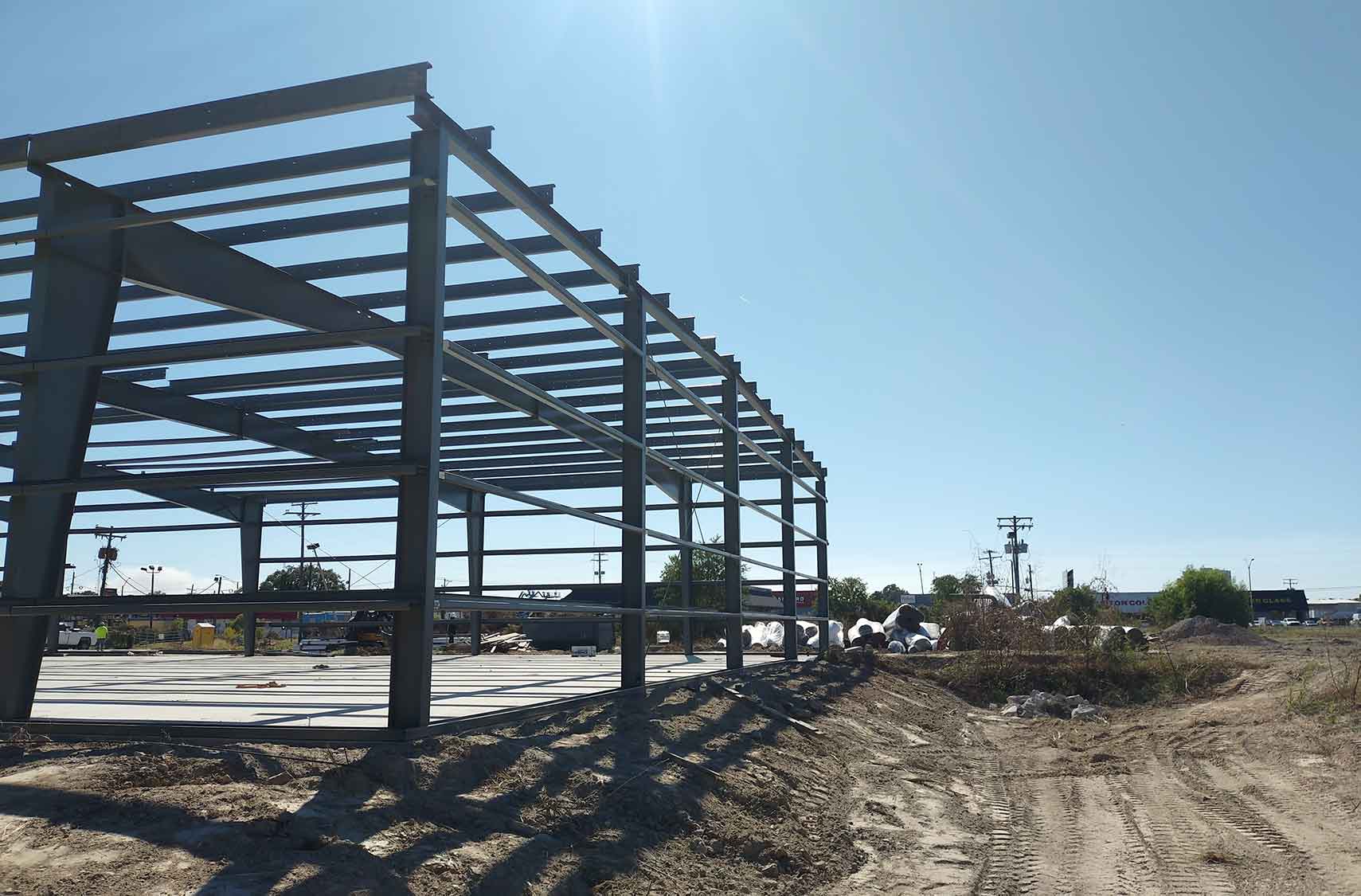
Ground-up commercial construction means starting with raw land or a demolition site and building a new commercial building.
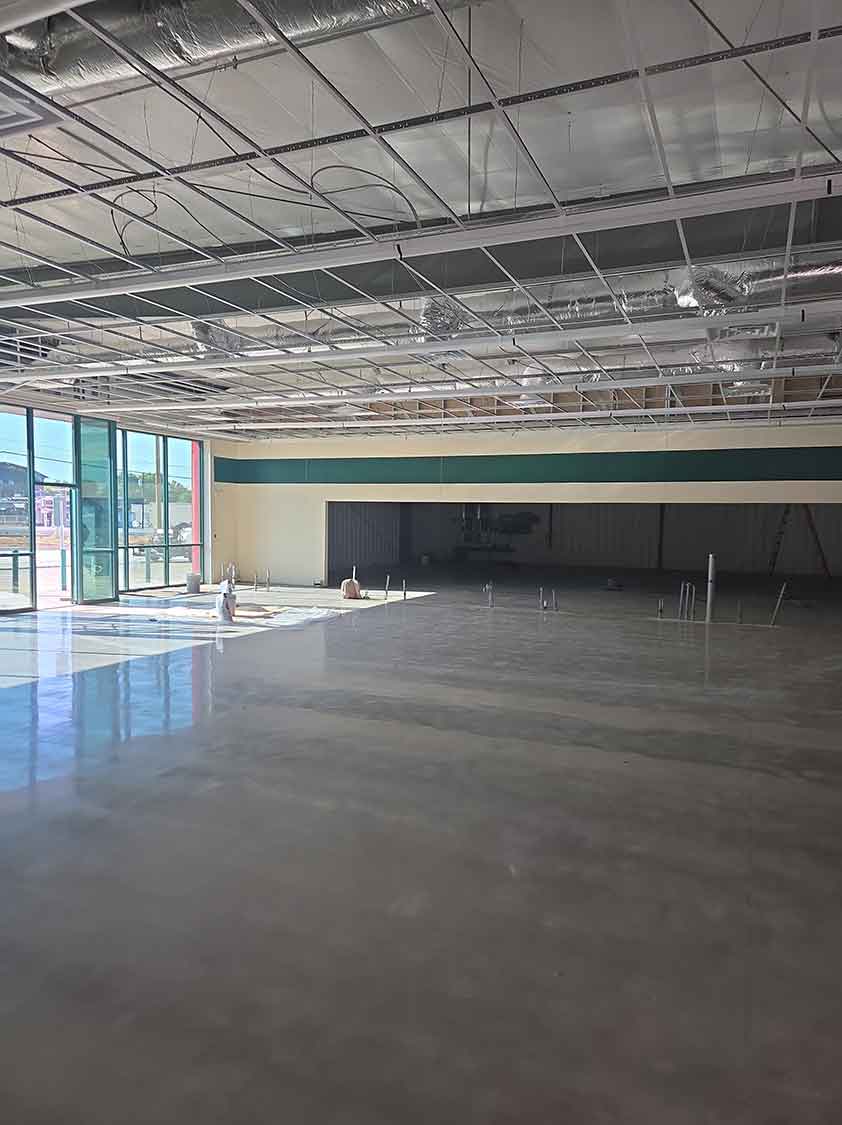
Tenant finish-out means starting with an existing building shell and building out the interior space for a specific tenant.
If you own or are buying land, you need ground-up. If you are leasing space in an existing building, you need tenant finish-out. Some projects need both.
What's Included in Ground-Up Commercial Construction
Ground-up commercial construction covers everything from raw site to certificate of occupancy:
- Site preparation, demolition, and utility coordination
- Foundation, slab, and structural framing
- Building envelope: roof, walls, glazing, weatherproofing
- MEP rough-in and finish
- Interior framing, drywall, ACT ceilings, flooring, paint, and millwork
- Site work: parking, sidewalks, landscaping, signage
- Final inspections and certificate of occupancy
What's Included in a Tenant Finish-Out
Tenant finish-out starts where ground-up ends, with an existing building shell, and builds out the interior:
- Demolition of any existing improvements
- Interior framing, drywall, and ACT ceilings
- MEP rough-in and finish (coordinated with existing base building systems)
- Flooring - VCT, LVT, carpet, polished concrete
- Doors, frames, hardware, and millwork
- Paint and finish carpentry
- Specialty equipment coordination (kitchen, medical, retail)
- Final inspections and certificate of occupancy
Cost: Ground-Up Is More Per Square Foot, But Project Size Drives Total Cost
Ground-up commercial construction costs more per square foot than tenant finish-out because it includes everything: site work, foundation, structure, envelope, and interior.
Tenant finish-out costs less per square foot because the building shell already exists. You are paying only for interior buildout.
Total project cost depends on building size and finish package. A 30,000 sf ground-up retail prototype can cost less in absolute dollars than a 5,000 sf high-end restaurant tenant finish-out with custom millwork and specialty kitchen equipment.
Schedule: Tenant Finish-Out Is Significantly Faster
A typical tenant finish-out runs 8 to 20 weeks from permit issuance to certificate of occupancy, depending on size and complexity.
A typical ground-up commercial project runs 6 to 12 months, sometimes longer for larger or more complex buildings.
The difference is the work: foundation, structure, and envelope take months of ground-up work that tenant finish-out skips.
Who Hires the Contractor: Owner vs. Tenant
On ground-up projects, the property owner or developer hires the contractor. On tenant finish-out projects, the tenant typically hires the contractor – after the lease is signed.
On built-to-suit projects, the same contractor can deliver both phases: ground-up shell followed by tenant finish-out. A single contractor handling both eliminates the handoff risk and simplifies accountability.
Can One Commercial GC Handle Both?
Yes – and on larger projects, a single contractor handling both is usually the better path. Splitting the work between two contractors creates schedule risk at the handoff and complicates accountability.
Sword Construction self-performs across both ground-up and tenant finish-out, so the schedule never splits between contractors when a project involves both.
Related Services & Articles
Frequently Asked Questions
What's the difference between ground-up commercial construction and tenant finish-out?
Ground-up starts at raw land or a demolition site and ends with a complete building. Tenant finish-out starts with an existing building shell and builds out the interior space for a specific tenant. Ground-up includes site work, foundation, structure, and envelope. Tenant finish-out typically starts after the building shell already exists.
Which is faster: tenant finish-out or ground-up?
Tenant finish-out is significantly faster - typically two to five months depending on size and complexity. Ground-up construction takes six to twelve months or more from site mobilization to certificate of occupancy.
Which costs more per square foot: ground-up or tenant finish-out?
Ground-up is more expensive per square foot because it includes site work, foundation, structure, and envelope. Tenant finish-out covers only the interior buildout. However, the total project cost depends entirely on the building size and finish package.
Can a single commercial contractor handle both ground-up and tenant finish-out?
Yes - and on larger projects, a single contractor handling both is usually the better path. Splitting the work between two contractors creates schedule risk at the handoff and complicates accountability.
When does my project need ground-up construction versus tenant finish-out?
Ground-up: when you own or are buying land and need a new building. Tenant finish-out: when you are leasing space in an existing building. Some projects need both - a developer building a ground-up shell that will eventually be finished out by individual tenants.
Who hires the ground-up contractor versus the tenant finish-out contractor?
Typically the property owner or developer hires the ground-up contractor. The tenant hires the finish-out contractor, often after the lease is signed. On built-to-suit projects, the same contractor can deliver both phases.
Ready to Talk About Your Commercial Project?
Whether it is ground-up, tenant finish-out, or both – send your plans.

- Commercial Construction Project Management: An Owner’s Guide - September 22, 2026
- What Is Commercial Framing? Steel Stud, Wood, and Structural Framing Explained - September 22, 2026
- What Is Value Engineering in Construction? What It Is, What It Is Not, and When to Ask for It - September 1, 2026