What to Look for in a Retail Construction Company
A retail construction company is a general contractor that builds stores, not a general commercial contractor that occasionally builds a store. The difference shows up in three places: how the contractor prices and schedules a rollout of many similar sites rather than one building, how much of the work its own crews self-perform instead of subcontracting completely, and how it coordinates against a landlord’s work letter and lease commencement date rather than a single owner’s timeline. This covers what actually separates a specialist in retail and restaurant construction from a generalist, when to bring one into a project, and the questions worth asking before signing a contract.
Retail Construction vs. General Commercial Construction
General commercial construction covers everything from offices to warehouses to healthcare buildings, each with its own one-off design and delivery plan. Retail construction is narrower and more repetitive by design: a brand’s prototype gets adapted to dozens or hundreds of sites, each one running against a hard opening date set by marketing, leasing, or a franchise agreement rather than by the construction schedule. A contractor built for one-off commercial work can still build a single store well, but a rollout of ten, fifty, or more sites, including freestanding formats like the ones on our automotive retail construction page, rewards a contractor that already has the prototype adaptation process, the vendor relationships, and the program management systems in place before the first site breaks ground.
When to Bring a Retail Construction Company Into the Project
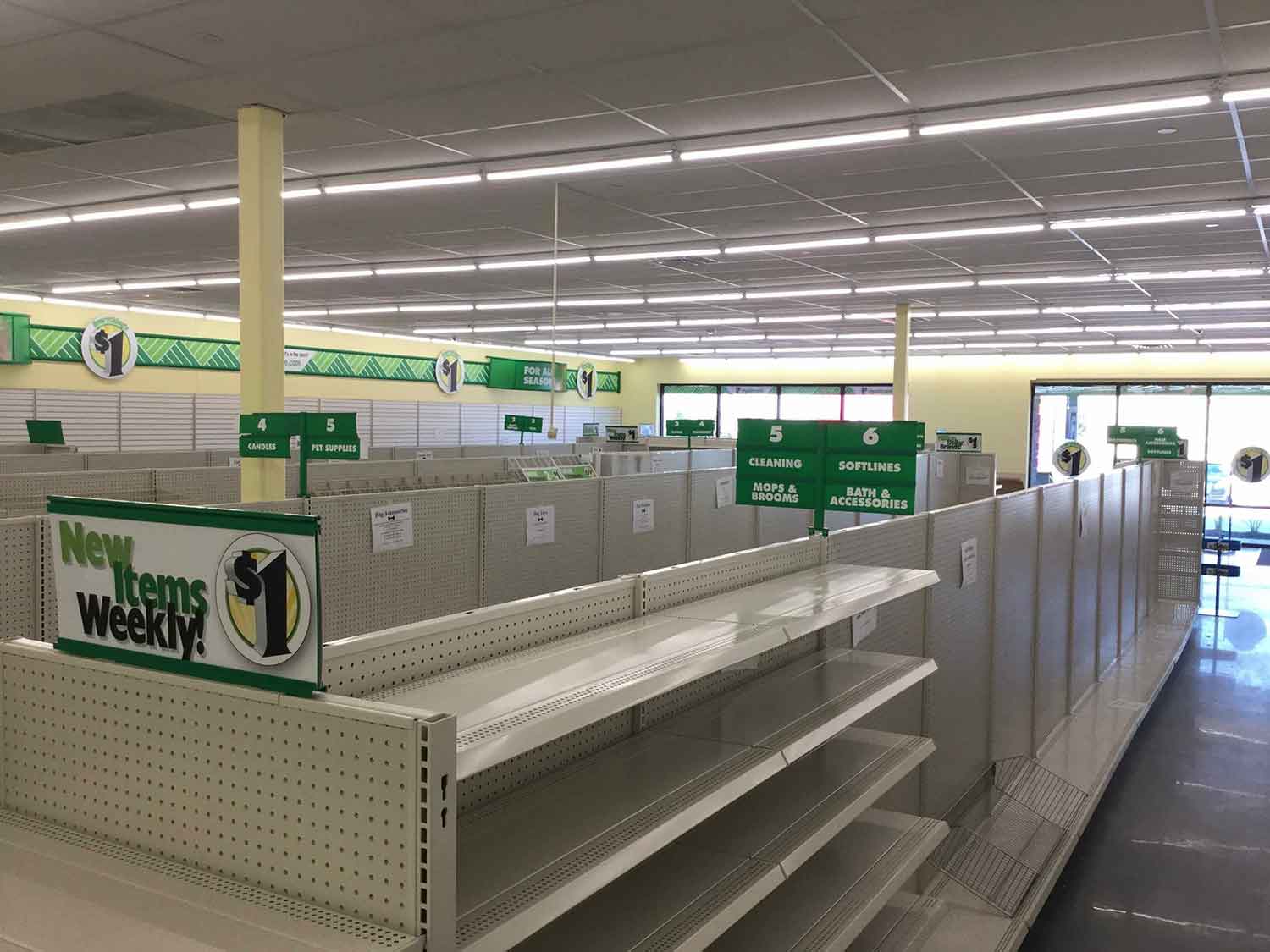
The earlier a retail contractor is involved, the more the relationship pays off, and the point where it pays off most is before the lease is signed. A contractor experienced in retail rollouts can review a site plan or a landlord’s work letter and flag utility, parking, or code issues that change the deal terms, price a prototype set before final drawings exist, and tell an owner within days whether a target opening date is realistic for that site, the same review we run on ground-up commercial construction sites before a lease closes. Brought in only after the lease is signed and the drawings are final, the same contractor can still deliver, but the schedule and the budget are locked in around decisions it never had a chance to influence.
Six Questions to Ask Before Hiring a Retail Construction Company
The quality of value engineering you get depends on the question you ask. “Can you get this under budget” produces a list of the easiest cuts. “Which items in this design cost more than the function they provide, and what would you do instead” produces value engineering. The second question takes the contractor longer to answer and is worth waiting for.
- How many sites of this format have you actually built? A specific number and a list of cities is a better answer than a general claim of retail experience.
- What trades do you self-perform? A contractor with in-house finish, framing, or concrete crews can often hold a schedule that an all-subcontracted GC cannot when one trade slips.
- How do you handle multiple sites opening in the same window? The answer should describe a program management system, not a promise to “make it work.”
- Who is my single point of contact, and are they the superintendent on site? A rollout with a different project manager for every site loses the consistency that makes a prototype worth having.
- What is priced into the bid versus what shows up as a change order later? Ask this about code review, utility connections, and any site-specific conditions the prototype does not anticipate, and see our value engineering guide for how a good contractor separates real savings from a downgrade list.
- Can you show a reference from an owner who ran more than one site with you? Repeat business from a multi-site client is the clearest signal a rollout went well the first time. Our own buyer's guide to picking a commercial general contractor covers the rest of the reference-check questions worth asking.
What Self-Performed Trades Buy a Retail Rollout
Self-performance means the contractor’s own employees, not a subcontractor, are doing a given trade, and on a retail rollout it matters more than it does on a single building. When one site in a ten-store program falls behind because a framing or finish subcontractor is stretched across other jobs, a contractor with its own crews in that trade can shift labor to protect the opening date without renegotiating a subcontract. The same self-performed crews carry over into tenant finish-out and commercial build-out work, which is part of what keeps a national brand’s stores looking and performing consistently regardless of which market they are in.
Frequently Asked Questions
Is a retail construction company more expensive than a general contractor?
Not necessarily. A retail specialist's prototype experience and self-performed trades often offset a higher day rate by cutting schedule risk and change orders, which is where multi-site programs actually lose money.
Does Sword Construction work directly with landlords, or only with the tenant?
Both. We deliver base-building and white box scope for landlords and developers, and tenant finish-out and ground-up stores for retail and restaurant brands, sometimes on the same project.
How many retail formats does Sword Construction build?
Our retail work spans freestanding auto-parts stores, discount retail, and quick-service and fast-casual restaurant prototypes, delivered under one contract with one superintendent per site.
What states do you build retail projects in?
We are licensed in 44 states and run retail rollouts nationally from our Kingwood, Texas headquarters using traveling superintendents and vetted local subcontractors.
Can you price a rollout before the final drawings are ready?
Yes. We regularly price from a prototype package or a schematic set and refine the number as drawings develop, which is normal for a multi-site retail program working against a leasing schedule.
Rolling Out Retail Sites and Comparing Contractors?
Send us your prototype package, the sites on your list, and your target opening dates. We’ll tell you plainly what we self-perform and where the schedule risk actually is.

- Change Orders in Construction: What Owners Need to Know - October 12, 2026
- Restaurant Remodel: The Process, Step by Step - October 12, 2026
- Tenant Improvement Allowance: What It Covers and How to Use It - October 5, 2026